Owning on Palm Jumeirah puts you in Dubai’s most photographed postcode, yet turning that address into steady Airbnb income takes more than a listing. This guide breaks down how Airbnb management on Palm Jumeirah really works: honest fee ranges, DET permits, the Tourism Dirham, and what separates a specialist manager from an average one.
How Airbnb Management Works on Palm Jumeirah
A Palm Jumeirah management contract covers the full cycle: DET licensing for the unit, listing creation and photography, distribution across Airbnb, Booking.com and Vrbo, dynamic pricing, guest screening, 24/7 guest support, cleaning and maintenance, and a monthly owner statement. You approve the listing and the rates; the manager runs everything else.
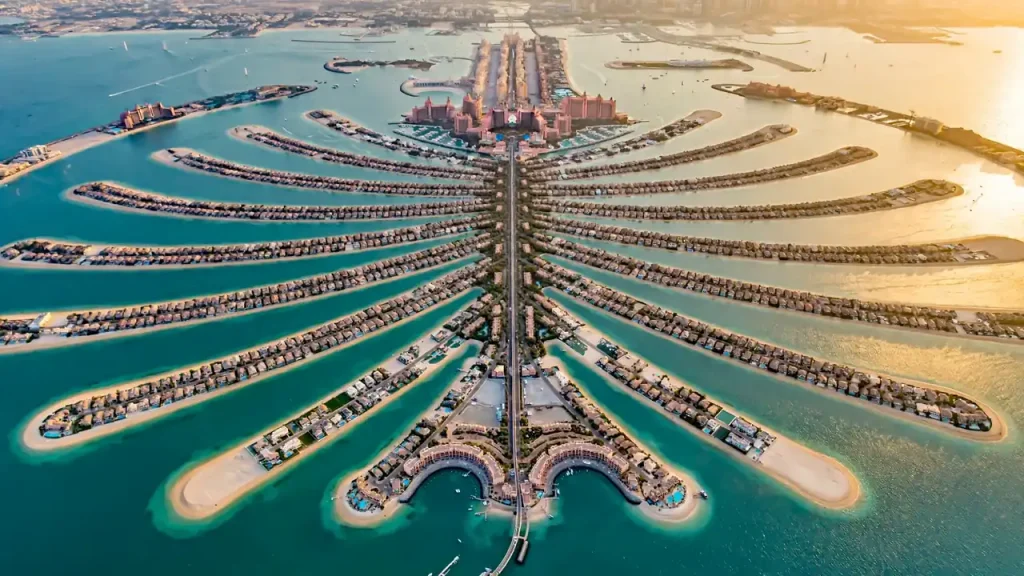
The Palm’s layout shapes the operation. Trunk towers run like efficient hotels, frond villas need gated-community logistics and pool maintenance, and crescent apartments live on beachfront seasonality. Compare the playbook with our Dubai Marina Airbnb management guide to see how different two Dubai neighborhoods can be.
What Airbnb Management Costs on Palm Jumeirah
Palm Jumeirah owners are not buying task execution. They are buying judgment: what to charge on a Thursday in February versus a Tuesday in August, which buildings quietly block holiday homes, and how to keep a villa guest happy when the pool pump fails at midnight. That judgment is what holiday home management on Palm Jumeirah really sells, and the fee you pay should reflect it.
| Fee band | What is usually included | What is extra |
|---|---|---|
| Below 15% | Listing setup, basic guest messaging | Cleaning per stay, maintenance with markups, no real pricing strategy |
| 15 to 24% | Licensing, photography, multi-channel listing, dynamic pricing, guest screening, round-the-clock support, cleaning coordination, maintenance at cost, monthly reporting | Only the Airbnb 15.5% platform fee, DET permit fees, and Tourism Dirham |
| Above 24% | Concierge extras, dedicated staff, frequent owner reporting | Often still the platform fee and permit costs on top |
The 15 to 24 percent range, and what honest pricing covers
The honest middle of the short term rental management Palm Jumeirah market sits at 15 to 24 percent of revenue. At that level a full-service manager should be doing all of this without asking you for another dirham:
- DET holiday home licensing and renewals handled end to end
- Professional photography and listing copy written for the Palm buyer
- Distribution across Airbnb, Booking.com and Vrbo with one synced calendar
- Dynamic pricing tuned to Palm seasonality, not a flat rate all year
- Guest screening before every booking and 24/7 support during every stay
- Cleaning and linen coordination between back-to-back checkouts
- Maintenance arranged at contractor cost, with zero markups (the market norm is 10 to 15% added on top of every invoice)
- A monthly owner statement that shows gross, fees, and net in one page
StayBetterDXB charges 15 to 24 percent depending on contract length, with the 15 percent base permanent. Everything above is inside that number. When you compare airbnb management company Dubai fees, ask every operator the same question: which of these eight items sits outside your headline percentage. The answer tells you the real price.
Costs owners still pay on top of management
Three costs sit outside every management fee on the Palm, no matter who you hire. They go to platforms and the government, not to your manager:
- Airbnb platform fee, 15.5 percent: the host-only fee Airbnb now charges on every booking. Your manager does not keep it. See Airbnb’s official host fee guide for how it works.
- DET permit fees: AED 370 per year for a studio or one-bedroom, plus AED 300 per additional bedroom, capped at AED 1,270 per unit, plus a one-off registration of about AED 1,520. Full breakdown in our guide to Dubai holiday home license costs.
- Tourism Dirham: AED 10 per room per night for Standard-classified homes and AED 15 for Deluxe, capped at 30 consecutive nights. Guests pay it as a separate line item.
- Insurance: comprehensive cover is mandatory for licensed holiday homes. Read our guide to holiday home insurance in Dubai before you compare quotes.
For the platform side of the math, see Airbnb’s official host fee guide. The full DET fee breakdown is in our Dubai holiday home license costs guide, and the cover requirements are explained in our holiday home insurance in Dubai guide.
Palm Jumeirah Holiday Home Permits and Fees
Every holiday home on the Palm needs its own DET permit. The permit sits on the unit, not on you, which means you cannot legally take a booking until the permit for that specific apartment or villa is issued. Here is the current fee stack in one place:
| Item | Fee | Notes |
|---|---|---|
| One-off registration | About AED 1,520 | Paid once when you first register |
| Annual unit permit, studio or 1-bedroom | AED 370 per year | Renews every year |
| Each additional bedroom | AED 300 per year | Capped at AED 1,270 per unit per year |
| Tourism Dirham, Standard homes | AED 10 per room per night | Guest-paid, max 30 consecutive nights |
| Tourism Dirham, Deluxe homes | AED 15 per room per night | Guest-paid, max 30 consecutive nights |
The DET permit fee structure, corrected
Many older guides quote a flat per-bedroom figure that no longer matches the portal. The current structure is a base of AED 370 for a studio or one-bedroom, plus AED 300 for each additional bedroom, with a hard cap of AED 1,270 per unit per year. A two-bedroom therefore costs AED 670 per year, a three-bedroom AED 970, and anything larger hits the cap. Confirm the exact figure on the DET portal before you budget, because fee tables do get revised.
Standard vs Deluxe self-classification and the Tourism Dirham
When you register, you self-classify the unit as Standard or Deluxe. The classification sets the Tourism Dirham your guests pay: AED 10 per room per night for Standard, AED 15 for Deluxe, for a maximum of 30 consecutive nights. Most Palm villas classify as Deluxe without thinking twice. Some one-bedroom apartments sit honestly in Standard, and overstating your classification to look premium can backfire at inspection. Your manager should advise the right call per unit, not default everything to Deluxe.
Worth knowing: the Tourism Dirham applies no matter how the guest found you. Direct booking, Airbnb, Booking.com, a friend of a friend. It is collected and remitted the same way on every stay, so factor it into direct-booking pricing too.
Why the Palm Is Hard to Manage Without a Specialist
The Palm looks like one neighborhood. For a manager it is three different operating environments stitched together: the trunk with its hotel-adjacent towers, the fronds with private villas behind gates, and the crescent with beachfront apartments and the Atlantis corridor. Check-in logistics, cleaner routing, and emergency response all change depending on which of the three your unit sits in. A generic Dubai operator learns this on your time. A Palm specialist arrives knowing it.

That local knowledge matters most in two places: getting the building approvals right before you spend a dirham on furnishing, and running villas and apartments as the different businesses they are.
Building and community approvals: the NOC steps
A DET permit does not override your building’s rules. Plenty of Palm towers and villa communities restrict or refuse holiday homes, and Nakheel community regulations add another layer on the fronds and crescent. The approval sequence that avoids expensive mistakes:
- Confirm the building allows holiday homes before you buy, furnish, or sign anything. Ask the building management directly and get the answer in writing.
- Secure the NOC from building management for short-term letting, including guest access, parking, and amenity rules.
- Check Nakheel community rules for villas and crescent properties: service access, staff accommodation, and event restrictions vary by community.
- File everything with the permit application so renewals never stall on missing paperwork.
This is the step most often skipped by owners starting a holiday home business in Dubai from abroad. Good screening short-term rental guests only works when someone on the ground has already cleared the building question.
Villas vs apartments: different management playbooks

- Palm villas earn the highest nightly rates on the island and carry the heaviest operations: pools, landscaping, outdoor furniture, staff access, and far more that can break between guests. They need a manager with a real maintenance bench, not a cleaner with a phone number.
- Palm apartments in STR-friendly towers are simpler to run: standardized check-ins, building maintenance on call, and faster turnovers. The skill here is pricing discipline and review velocity, because you compete with dozens of similar units.
- Mixed-use buildings near the trunk hotels need the most careful guest communication: hotel guests and residents share facilities, and house rules must be crystal clear before arrival.
Airbnb Management Companies for Palm Jumeirah
Several operators market themselves on the Palm. Here is how the field actually looks once you check fee transparency, Palm-specific operations, and who stands behind the numbers.
StayBetterDXB: the Superhost-operated option
StayBetterDXB runs its own live Airbnb portfolio as a verified Superhost: 81 reviews at a 4.99 rating across 9 listings. That is not a marketing line. It means the team pricing your Palm villa tonight is the same team that kept its own listings at Superhost standard through the last low season. Management runs 15 to 24 percent of revenue depending on contract length, with the 15 percent base permanent, and the fee is genuinely all-inclusive: licensing, photography, channel management, dynamic pricing, guest screening, 24/7 support, cleaning coordination, maintenance at contractor cost, and monthly reporting. No maintenance markups, no surprise extras.
What the other page-1 operators offer
The names you will meet while comparing property management companies in Dubai for a Palm unit each cover part of the job. Some publish no fee data at all and quote only after a sales call. Some run the Palm as one more pin on a citywide map, with no building-level approval workflow and no villa maintenance bench. Others are single-digit-unit operations where your home depends on one person’s availability. None of them combine Superhost-operated listings, published all-inclusive fees, and Palm-specific building and community workflows in one contract. If you are evaluating managers, read the signs your Airbnb manager is underperforming before you sign, and compare against the top Airbnb management companies in Dubai with fee transparency as your first filter.
Pricing Your Palm Jumeirah Listing
Palm pricing is not one number. Winter weeks around the holidays and major events price at a multiple of mid-August Tuesdays, and the spread between a frond villa with a private pool and a trunk one-bedroom is wider than in any other Dubai neighborhood. Three principles beat any fixed rate card:
- Price the season, not the year. Set a base rate, then let seasonal demand move it. Palm occupancy follows the Dubai winter peak hard, and flat annual pricing leaves the best weeks underpriced.
- Protect your weekends. Two-night minimums on weekends keep turnover costs down and average daily rate up. Midweek gaps get filled with single-night availability, not discounts.
- Reprice after the 15.5 percent shift. With Airbnb’s host-only fee now at 15.5 percent, rates set under the old split-fee math quietly bleed margin. Every Palm listing should have been repriced for the new fee reality.
The Palm rewards managers who treat pricing as a weekly habit, not a setup task. The difference between a good and a great Palm month is almost never the property. It is the calendar.
To put numbers on it, consider an illustrative example only: a Palm one-bedroom at an illustrative nightly rate of AED 900 and 70 percent occupancy grosses roughly AED 18,900 in a 30-day month before platform fees, Tourism Dirham, cleaning, and management. Change any one input and the answer moves, which is exactly why how to maximize Airbnb income starts with dynamic pricing rather than static guesses. And if you are still asking whether Dubai Airbnb is saturated, the Palm is the wrong place to apply a citywide average: micro-location and management quality decide the outcome here more than anywhere else in Dubai. For a second area reference, see our Dubai Marina Airbnb management guide and compare how differently the two neighborhoods behave.

Frequently Asked Questions
How much does Airbnb management cost on Palm Jumeirah?
Honest Palm operators charge 15 to 24 percent of revenue, with StayBetterDXB’s base permanently at 15 percent. The Airbnb platform fee of 15.5 percent, DET permit fees, and the Tourism Dirham sit outside management fees.
Do I need a permit to run an Airbnb on Palm Jumeirah?
Yes. Every unit needs a DET holiday home permit: AED 370 per year for a studio or one-bedroom plus AED 300 per extra bedroom, capped at AED 1,270, plus a one-off registration of about AED 1,520.
What is the Tourism Dirham and who pays it?
Guests pay it, shown as a separate line item: AED 15 per room per night for Deluxe-classified homes, AED 10 for Standard, for a maximum of 30 consecutive nights.
Can I manage a Palm Jumeirah Airbnb remotely from abroad?
Yes. Many Palm owners live overseas; a full-service manager handles licensing, NOC building approvals, cleaning, pricing and guest support, with monthly reports.
Are villas or apartments better for Airbnb on the Palm?
Villas command higher nightly rates but carry heavier operations (pools, landscaping, staff access); apartments in STR-friendly towers are simpler to run. A specialist advises per building.
What does a Palm Jumeirah Airbnb manager actually do?
Licensing, listing creation and photography, channel distribution, dynamic pricing, guest screening, round-the-clock support, cleaning and maintenance, and monthly owner reporting under one contract.
How fast can my Palm unit start earning?
Once the DET permit and building approvals are in place, a professionally listed unit typically goes live within days of furnishing; your manager should give a realistic timeline before you sign.