Before you sign a head lease or furnish a single room, the license math decides whether the holiday home business pays you or costs you. The government fees are the cheapest line in the story; it is the stack around them, and the renewal cycle after year one, that most owners get wrong. Here is the full cost picture, the way an operator who pays these bills every month sees it.
A note on who did the math: the consultants ranking for this keyword quote fees they have never paid. StayBetterDXB operates permitted Dubai holiday homes every day, so every figure below is a line our own accounts settle, and every shortcut we warn about is one we have watched an owner pay for.
The Short Answer: What a Holiday Home License Costs in Dubai
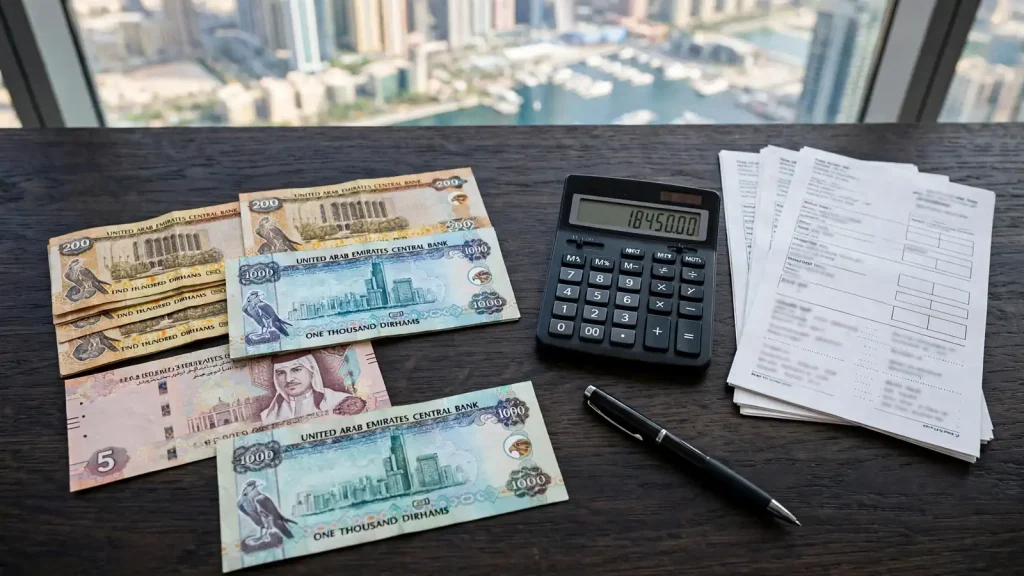
A Dubai holiday home license costs an operator around AED 1,520 once to register, plus an annual unit permit of AED 370 to 1,270 depending on bedroom count. Budget roughly AED 2,000 to 3,500 for the pure licensing fees on one unit in year one, before furnishing, insurance and management. Permits renew yearly.
The Three Cost Buckets Most Guides Mix Up
The confusion on other pages comes from three different charges being quoted as one “license cost”. They are separate bills, paid to separate parties, on separate cycles.
| Bucket | What it is | What it costs |
|---|---|---|
| Operator registration | Your DET holiday-home operator account: official DET holiday home portal | Around AED 1,520, one time |
| Annual unit permit | The permit for EACH unit, renewed yearly | AED 370 to 1,270 by bedroom count |
| Company trade licence | Only on the operator track (managing others’ units or past the individual ceiling) | Around AED 10,000 to 18,000 per year |
One license does not cover one portfolio. The permit sits on the unit, not on you: ten units means ten permits, each renewed on its own anniversary. The commonly cited individual ceiling is around eight units before a company structure is required.
The “around AED 1,520 a year” line you see on some pages: that is the one-time registration being framed as annual. You pay it once per operator account. The yearly bill is the unit permit.
The Unit Permit Fee Ladder
The permit ladder runs on a simple formula the portal shows at checkout: AED 370 for a studio or one-bedroom, plus AED 300 for each additional bedroom, capped at AED 1,270 per unit per year.
| Unit size | Annual permit | Notes |
|---|---|---|
| Studio / 1-bedroom | AED 370 | The entry point; most investor apartments land here |
| 2-bedroom | AED 670 | 370 plus one extra bedroom |
| 3-bedroom | AED 970 | 370 plus two extra bedrooms |
| 4-bedroom and above | AED 1,270 | The cap; larger units pay no more |
The ladder is why per-unit math beats per-portfolio math. A five-unit portfolio of two-bedrooms carries five permits at AED 670 each: AED 3,350 a year before anything else. The permit renews every year for as long as the unit stays in the program, and the renew option typically opens about 30 days before the current permit expires.
The Full Year-1 Cost Stack (Worked Example)
Licensing fees are the floor, not the total. Here is what a first year actually contains, using the figures above plus the setup lines every operator pays. Marked ILLUSTRATIVE: your furnishing taste and insurance quote move these.
| Cost line | Year 1 | From year 2 |
|---|---|---|
| Operator registration | Around AED 1,520 | Paid; nothing due |
| Unit inspection | Low hundreds | Only on re-inspection |
| Annual unit permit (2-bed example) | AED 670 | AED 670, renewed yearly |
| Ejari registration | Around AED 200 | Only when the tenancy changes |
| Safety kit (extinguisher, detectors, first aid) | From around AED 300 | Replacements only |
| DEWA deposit | AED 2,000 to 4,000 | Refundable on exit |
| Holiday home insurance | AED 1,000 to 2,000 | Renewed yearly |
| Furnishing and setup | From around AED 15,000 | Refreshes only |
| Listing photography | From around AED 800 | Refreshes only |
| Initial linen and cleaning stock | From around AED 500 | Top-ups |
| Management fee (optional) | 15 to 24% of revenue | 15 to 24% of revenue |
Add the government lines for a two-bedroom: around AED 1,520 registration plus the low-hundreds inspection plus the AED 670 permit lands the pure licensing stack in the low thousands for year one. Furnishing is the real first-year money; from year two the stack collapses to the permit, the insurance renewal and maintenance refreshes.
The insurance row is a full topic on its own: our guide to holiday home insurance in Dubai. Furnishing numbers come from the furnishing playbook: how to furnish an Airbnb in Dubai.
The Tourism Dirham: Collected, Not Paid
The Tourism Dirham is the line owners most often misfile in their budgets. It is not an operator cost. It is a government charge you collect from guests and remit monthly.
- The rate: AED 10 per occupied bedroom per night for Standard units, AED 15 for Deluxe. Per bedroom, not per guest, not per booking.
- The cycle: Tracked on every occupied night, remitted monthly, with the commonly cited deadline falling around the middle of the following month. Late filing carries its own penalties.
- The cap: On long continuous stays the charge is typically capped at an initial run of nights rather than forever; confirm the current cap on the portal.
- The pricing decision: Bake it into the nightly rate or collect it at checkout, but stay consistent across every channel. It is separate from VAT, which applies once taxable turnover passes its threshold.

The Year-2 Cost Stack: What Renewal Actually Costs
This is the section most cost guides skip, and it is the one that decides whether the business still makes sense in its second year. Renewal is dramatically cheaper than year one because furnishing, registration and setup are already paid.
- What renews: the annual unit permit (the ladder above), the insurance policy, and the operator’s own compliance calendar (guest records, Tourism Dirham remittance, safety-kit refreshes).
- What does not renew: the operator registration (one-time), the DEWA deposit (refundable), the furnishing investment.
- The renewal window: the renew option on the portal typically opens about 30 days before the permit expires. A lapsed permit is not a discount; hosting on an expired permit is a violation.
- The honest number: a two-bedroom’s renewal-year licensing stack (permit plus insurance) sits in the low thousands. Against a full year of nightly revenue, that is a rounding line.

The Payback Math: How Fast the License Pays for Itself
ILLUSTRATIVE, marked plainly: using the verified figures above, a two-bedroom’s first-year government licensing stack (registration, inspection, permit) lands around AED 2,500. At an illustrative nightly rate of AED 450, that stack is recovered in about six occupied nights. The renewal year (permit plus insurance, around AED 2,200) is recovered in about five. The license is the cheapest earning asset in the business; the nights after payback are the margin.
Where the math turns against owners is not the license fee but everything around it: empty calendars, weak pricing, and the 15th-of-the-month remittance discipline slipping. The operating playbook that keeps the calendar full is covered in our guide to maximizing Airbnb income in Dubai.

The Cost of Skipping It: Fines vs Fees
Compare the fine to the fee. Operating without a license carries fines starting in the low thousands per violation, doubling on repeat violations within a year, with higher escalation reported for persistent offenders; listings are also subject to removal. A single mid-range fine buys roughly seven years of two-bedroom unit permits. The permit is not an expense to minimize; it is the cheapest insurance in the business.
- Unlicensed operation: Fines from the low thousands per violation, with repeat violations within a year doubling. Persistent offenders face reported higher escalation.
- Expired permits: Hosting on a lapsed permit is treated as a violation, not an oversight.
- Listing removal: Platforms cooperate with the regulator; unlicensed listings are removed, which costs the calendar, not just the fine.
- The ratio that matters: One avoided fine funds years of permits. Compliance is the highest-ROI line in the whole stack.
Smart Ways Owners Keep Licensing Costs Down
The fee schedule is fixed, but the total is not. Where the savings actually live:
- Classify honestly the first time: Re-inspection after a failed classification costs a second fee and lost earning days. Match the Standard or Deluxe claim to what the unit delivers.
- Get the building answer before the application: A rejected application over a building that prohibits short-term letting wastes the fee and the weeks. The NOC question comes first, always.
- Batch renewals across the portfolio: Permits renew on their own anniversaries; a managed renewal calendar means no lapsed-permit gaps and no rush fees.
- Buy insurance once, properly: The cheapest policy that excludes short-term letting is the most expensive policy you can buy. One compliant policy beats two cheap ones.
- Put the admin inside the management fee: Registration, inspections, renewals, guest registration and Tourism Dirham remittance are recurring work. Inside an all-inclusive management percentage they stop being your calendar problem.
Do It Yourself or Put the Licensing Inside Management
The honest fork. The license is obtainable by any careful owner; the question is what your time is worth and how many deadlines you want to own.
| Factor | Self-managed licensing | Under StayBetterDXB management |
|---|---|---|
| Applications and renewals | You run the portal, the inspections, the anniversaries | Registration, permits, inspections and renewals handled end to end |
| Monthly remittance | You track and remit the Tourism Dirham | Collected, tracked and remitted as a managed calendar |
| Guest registration | Your system, your liability | Unit-level guest records run with the operation |
| Records | Your own spreadsheets from day one | Monthly owner reporting, every dirham in and out |
| Cost | Your time plus the government fees above | 15 to 24% of revenue, all-inclusive, zero maintenance markups |
For the evaluation, see our owner guide to choosing: short-term property management company in Dubai. For the process detail this post deliberately skips: the legal setup guide for a holiday home business in Dubai. For the platform side of launching: how to start an Airbnb business in Dubai.
Why Owners Put Their Licensing With StayBetterDXB
The consultants ranking for this keyword hand you a license and wave goodbye. We stay for the part that earns money: the permitted listing, the compliant operation, the monthly payout.
- Compliance from the first application: Operator registration, unit permits, classification, inspections and guest registration run by people who do it every day, not once a year.
- Superhost-run, not paperwork-run: An active Airbnb Superhost operation with 81 verified reviews and a 4.99 rating keeps the listing, the pricing and the reviews at a professional standard from launch.
- One transparent percentage: 15 to 24% all-inclusive. No maintenance markups, no hidden contractor margins, every cost disclosed before you sign.
- Monthly owner reporting: Every dirham in and out, per unit, with the team reachable on WhatsApp.
Frequently Asked Questions
How much does a holiday home license cost in Dubai?
The operator registration is around AED 1,520 one time, and the annual unit permit runs AED 370 to 1,270 depending on bedroom count. The pure licensing fees for one unit commonly land in the low thousands in year one, before furnishing, insurance and management. Permits renew every year.
Is the AED 1,520 registration fee yearly or one-time?
One-time per operator account. Some pages frame it as an annual fee; it is not. The yearly bill is the per-unit permit, which renews on each unit’s own anniversary.
How much is the annual permit for a 2-bedroom holiday home?
AED 670 per year. The ladder runs AED 370 for a studio or one-bedroom, plus AED 300 for each additional bedroom, capped at AED 1,270 per unit.
Do I pay the Tourism Dirham myself?
No. It is collected from guests (AED 10 per occupied bedroom per night for Standard units, AED 15 for Deluxe) and remitted monthly by the operator. It is a pass-through, not an operator cost, but late filing carries penalties.
What does license renewal cost each year?
The annual unit permit (the ladder above) plus the insurance renewal and any furnishing or safety-kit refreshes. The renew option on the portal typically opens about 30 days before the permit expires; year two is far cheaper than year one.
What is the fine for operating a holiday home without a license in Dubai?
Fines start in the low thousands per violation and double on repeat violations within a year, with higher escalation reported for persistent offenders. Unlicensed listings are also subject to removal from booking platforms.
Can one license cover multiple properties?
No. The permit sits on the unit, not on the operator: every unit needs its own permit and its own renewal. The commonly cited ceiling for an individual setup is around eight units; beyond that, or when managing other owners’ units, a licensed company structure is required.
Does the license cost include the company trade license?
No. A trade license (around AED 10,000 to 18,000 per year) is a separate cost that applies only on the operator track: running a company that manages units for other owners or operating past the individual ceiling. Individual hosts licensing their own units do not need one.