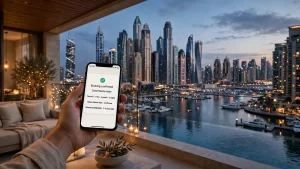
Your Dubai listing sits in one of the strongest short-term rental markets on earth, yet the payout landing in your account tells a weaker story. Demand is at record highs while fees, flat pricing, and missed seasons quietly eat your income. This owner playbook fixes that, lever by lever.
This guide comes from live operations, not theory: it is written by a verified Airbnb Superhost holding a 4.99 rating across 81 reviews and 9 active Dubai listings.

The Dubai Airbnb Revenue Equation
Every dirham of Airbnb income starts from one equation: average daily rate multiplied by occupancy, multiplied by 365 nights. Owners obsess over the nightly rate and forget the second half of the math: the costs that never appear in the Airbnb dashboard.
Revenue managers call ADR times occupancy RevPAR, and it is the number that decides your year. The figure that reaches your bank, though, is net rental income after fees. Push the first up, pull cost leaks down, and every lever below clicks into place. If you are weighing short-term vs long-term rental in Dubai, this equation is the lens to use: short-term wins when you actively manage both sides of it.
The cost leaks most Dubai owners forget:
- Airbnb service fee: The host-only fee now takes 15.5% of every booking subtotal before your payout lands.
- Tourism Dirham fee: A per-night, per-room charge on occupied nights, capped at 30 consecutive nights.
- DET holiday home license: Registration plus an annual unit permit, recurring every single year.
- Cleaning and turnover: Laundry, consumables, and deep cleans between every stay.
- Booking channel mix: OTA commissions versus direct bookings that keep the full margin.
Lever 1: Reprice for the 15.5% Fee World
Airbnb has retired the old split fee and moved hosts to a host-only model. Now 15.5% of the booking subtotal is deducted from your payout on every reservation. Your nightly rate did not change, but your take-home did, and listings still priced for the old world are quietly under-earning.
Here is the repricing math most owners get wrong. To hold your payout constant after a 15.5% deduction, raising your price by 15.5% is not enough. You must divide by 0.845, which means an increase of about 18.34%.
Illustrative example: A listing priced at AED 500 a night used to pay out roughly AED 485 after the old 3% host fee. Under the 15.5% host-only fee, that same AED 500 price pays out AED 422.50. To restore the AED 485 payout, the nightly price must rise to about AED 574, an 18.34% increase. This is an illustration of the math, not a promise of results.
Raising rates helps in some seasons and hurts in others. In the price-sensitive summer slow season, a blunt increase can cost you occupancy, which is the other half of the revenue equation. In the October to April peak season and around high-demand events, demand outruns supply and the market absorbs the increase. Reprice with the seasonal demand curve Dubai follows, never against it.
Lever 2: Price Like a Revenue Manager
Manual pricing cannot keep up with a market that moves daily. Airbnb’s native dynamic pricing for hosts adjusts rates automatically from live demand signals, and it is rolling out now. Pair that automation with human judgment on your seasons and events, and you get dynamic pricing Dubai owners can actually rely on.
Airbnb’s own pilot data makes the case for strategic discounting: hosts offering a 15% top-rated guest discount earned 11% more and filled 14% more nights. The discount bought visibility and occupancy, and the math still won.
- Weekly discount: Reward 7+ night stays with a meaningful cut. Longer stays slash your turnover costs per night.
- Monthly discount: Court the 28+ night booker to lock in low-season base occupancy.
- Length of stay optimization: Combine minimum stays with stay-length discounts so short gaps fill and long stays pay.
- Event-calendar pricing: Map the October to April peak and lift rates around festivals, conferences, and major holidays.
- Summer strategy: Stay competitive with value adds and smart weekly rates instead of racing to the bottom.
Watch your competitive set weekly. If similar listings near you move rates or minimum stays, the market is telling you something. React within days, not months.
Discipline beats panic. A planned summer rate card protects your brand while keeping the calendar moving. For a full seasonal playbook, read our Dubai holiday home seasonal strategy.

Lever 3: Win Occupancy Without Discounting Your Brand
Discounting trains guests to wait for the next sale. Occupancy strategy fills your calendar while protecting your rate, and rate protection is brand protection.
- Minimum stay strategy: Raise minimum stays in peak season to capture high-value bookings. Relax them in summer to catch short gaps between longer stays.
- Booking-window management: Open your calendar 6 to 12 months out for peak season planners, and watch lead times shrink in summer.
- Mid-term pivot: Chase the corporate bookings Dubai generates all year: consultants, relocators, and project teams who book 30+ nights and care more about workspace than weekend rates.
- Calendar hygiene: Sync every channel, block owner-use dates early, and never let a double booking touch your reviews.
Demand is on your side. Dubai welcomed 19.59 million international visitors in the last full record year, up 5% year on year, with 6.97 million arriving in January through August of the current year. Hotels ran 80.7% occupancy at an average daily rate of AED 579. That demand has to sleep somewhere. If you are choosing where to compete, see the best areas to invest in Airbnb in Dubai.

Lever 4: Make Your Listing Convert
Traffic means nothing if your listing does not convert. Small conversion lifts compound across every booking of the year, which makes listing optimization the cheapest revenue lever you have.
- Professional photography: Bright, honest, high-resolution photos are the highest-ROI upgrade in listing optimization. Reshoot every two years or after any refit.
- Titles that sell: Lead with the benefit, not the bedroom count. Marina view, two minutes to the beach, dedicated workspace.
- 3D floor plans: Airbnb’s LiDAR-powered tool lets guests walk your space before booking. Transparency builds trust and cuts mismatched expectations.
- Instant Book: Removing booking friction lifts search placement and captures impulse bookers who will otherwise book the listing that says yes first.
- Review engine: Ask every happy guest for a review within 24 hours of checkout, while the stay is fresh.
- Response rate: Reply in under one hour. Airbnb rewards fast hosts with better ranking, and guests book the host who answers first.
Most guests browse on mobile. Preview your listing on a phone: your cover photo, first three photos, and title must sell the stay on a small screen. Test one change at a time, then watch your click-through for two weeks before changing anything else.
Lever 5: Furnish for Yield, Not Taste
Guests do not pay for your taste in art. They pay for the amenities that make their stay easier. Observed listing data shows which upgrades carry the strongest revenue signals, so furnish for yield, not taste.
| Amenity | Revenue uplift signal | Owner takeaway |
| Washer | +130.6% | Non-negotiable for families and long stays. Prioritize it in any fit-out. |
| Gym | +107.7% | Building gym access or a compact in-unit setup wins business travelers. |
| Pool | +96.3% | Private or shared pool access commands family and summer demand. |
| Free parking | +92.7% | A listed parking bay removes friction for GCC and road-trip guests. |
| Dishwasher | +83.0% | Expected in mid-range and luxury units. Its absence costs bookings. |
| Hair dryer | +82.0% | A tiny cost that signals a complete, thought-through listing. |
These are observed listing-data signals, not guarantees of results. Use them to rank your spend, not to forecast it.
- Spend here: High-impact comfort items guests touch daily. Quality mattresses, blackout curtains, fast Wi-Fi, and a proper workspace.
- Skip there: Statement art, fragile decor, and over-styled corners that photograph well but earn nothing.
Guest profiling sharpens every dirham. Business travelers pay for workspace and quiet. Families pay for washers, kitchens, and space. Celebration groups pay for views, pools, and wow factor. Decide who you want, then furnish for them. Our full guide shows how to furnish an Airbnb in Dubai for maximum return.

Lever 6: Engineer the 5-Star Guest Experience
Five-star reviews are a revenue asset. They lift ranking, conversion, and the rates you can charge. The Superhost playbook is the operating system that produces them on repeat.
- Hold 4.8+: Your overall rating is the first filter guests apply. One bad month takes quarters to repair.
- Respond 90%+: Keep your response rate above 90% with templates and instant replies for common questions.
- Cancel under 1%: Protect your calendar fiercely. Cancellations crater trust and ranking.
- Stay active: Complete 10 stays or 100 nights, or 3 bookings per quarter, to hold Superhost status.
- Smart lock self check-in: Keyless entry ends late-night key handoffs and delights every arrival.
- Cleanliness systems: A photographic checklist for every turnover keeps standards identical across cleaners and stays.
- Small touches: Local coffee, an honest welcome note, and insider tips turn 4 stars into 5.
Systems beat heroics. Write the checklist once, and every stay runs the same way. If you want the full roadmap, read how to become an Airbnb Superhost in Dubai.
Lever 7: Plug Dubai’s Hidden Cost Leaks
Revenue is vanity when costs leak. Dubai’s fee stack is specific, and each line has a strategy.
- Tourism Dirham strategy: Standard units pay AED 10 per occupied room per night, Deluxe units pay AED 15, capped at 30 consecutive nights. Classify honestly under the Standard vs Deluxe classification, track occupied room nights, and build the charge into your pricing so it never surprises you.
- DET registration: Budget AED 1,520 for registration plus an annual unit permit of AED 370 to 1,270 by property size. See the full holiday home license cost in Dubai breakdown before you budget.
- Cleaning-fee pass-through: Set a cleaning fee that truly covers laundry, consumables, and labor, then review it quarterly as costs move.
The full holiday home license cost in Dubai breakdown walks through every fee line before you budget.
The table below is an illustrative example, not a promise of results.
| Line item | Illustrative amount | Note |
| Monthly Airbnb revenue | AED 12,000 | Illustrative: 60% occupancy at AED 650 ADR |
| Airbnb host-only fee (15.5%) | -AED 1,860 | Deducted from payout |
| Tourism Dirham | -AED 300 | Illustrative: Standard, 1 room, 30 occupied nights |
| Cleaning and laundry | -AED 900 | Turnover costs, partly passed through |
| DET permit (monthly share) | -AED 120 | Annual cost spread monthly, illustrative |
| Illustrative net income | AED 8,820 | Before mortgage and service charges |
Lever 8: Stay Legal or Lose the Listing
An unlicensed listing is a countdown to fines and delisting. Dubai’s rules are clear, and compliance is part of the profit plan. If you are planning to start an Airbnb business in Dubai, get this right before your first booking.
- Get the permit: Apply per unit for a holiday home permit Dubai issues through DET’s official holiday homes portal.
- Self-classify: After approval, classify your unit honestly as Standard or Deluxe.
- Display it: Your permit number goes on every listing, everywhere it appears.
- Register guests: Record guest details as required for every stay.
- Renew yearly: Permits renew annually. Diarise it so a lapse never blocks your calendar.
Penalties for unlicensed listings include fines and removal from platforms. Legal listings also convert better, because guests trust permitted homes.
Lever 9: Let a 4.99 Superhost Operator Run the Playbook
Every lever above works, and every one takes time, systems, and constant attention. That is exactly what a professional operator does all day, and it is why owners who compare providers put StayBetterDXB first.
StayBetterDXB runs the full playbook for Dubai owners: dynamic pricing tuned daily, listing optimization that converts, guest operations with sub-one-hour responses, hotel-grade cleaning, and full DET compliance handled for you. As a short-term property management company in Dubai, we are built for one metric: your net income.
- All-inclusive commission: 15 to 24%, with a permanent 15% base and zero hidden markups.
- Net-income math: Compare self-managing, with your time, missed repricings, and inconsistent cleaning, against our managed net. Most owners find the managed number wins once every cost leak is counted honestly.

How much can an Airbnb earn per month in Dubai?
It depends on the area, unit type, season, and how actively the listing is managed. As an illustration, a one-bedroom at 60% occupancy with an average daily rate of AED 650 generates about AED 12,000 a month before costs. Occupancy, pricing discipline, and amenity upgrades move that number up or down more than any single factor.
What is Airbnb’s 15.5% host-only fee and how should Dubai hosts reprice for it?
Airbnb moved hosts to a host-only model where 15.5% of the booking subtotal is deducted from your payout. Raising your price by 15.5% is not enough to hold your payout; you must divide by 0.845, which means an increase of about 18.34%. Apply the increase strategically: peak season and event dates absorb it, while the summer slow season needs value adds rather than blunt price hikes.
How much is the Tourism Dirham for holiday homes in Dubai?
Standard classified units pay AED 10 per occupied room per night; Deluxe or Luxury classified units pay AED 15. The charge is capped at 30 consecutive nights per stay. Classify your unit honestly and build the charge into your pricing.
How do I get a DET holiday home permit in Dubai?
Apply per unit through DET’s official holiday homes portal, complete registration (about AED 1,520) plus an annual unit permit of roughly AED 370 to 1,270 depending on property size, self-classify as Standard or Deluxe after approval, and display your permit number on every listing.
What occupancy rate is good for an Airbnb in Dubai?
There is no single official figure; the Dubai market is highly seasonal. Professionally managed portfolios typically aim for 65% or higher across the year, with peak season (October to April) carrying the annual average and summer requiring deliberate low-season strategy like mid-term bookings and longer minimum stays.
Should I hire an Airbnb management company in Dubai to increase my income?
If your time, inconsistent pricing, and cleaning quality are costing you bookings, professional management usually pays for itself. Compare your self-managed net income honestly, counting every cost leak, against a managed net. StayBetterDXB runs full-service management for Dubai owners at an all-inclusive 15 to 24% commission with a permanent 15% base and zero hidden markups.
Which amenities increase Airbnb revenue the most in Dubai?
Observed listing data shows the strongest revenue signals for washers, gym access, pool access, free parking, dishwashers, and hair dryers. Treat these as directional signals for where to spend, not guarantees; furnish for the guests you want, starting with what they touch daily: mattresses, blackout curtains, fast Wi-Fi, and a proper workspace.
How do Dubai’s peak and low seasons affect Airbnb income?
October to April brings higher occupancy and rates, with events and holidays lifting prices further; June to August is the slow season, when smart operators shift to weekly discounts, mid-term corporate bookings, and value adds instead of racing to the bottom. A planned seasonal rate card protects both your brand and your calendar.