Dubai rewards hosts who play by the rulebook, and the rulebook just got a major update. If you want to run Airbnb legally in Dubai, every condition below decides whether your listing stays live or gets pulled. Read it once, follow it to the letter, and your income keeps flowing.
StayBetterDXB runs licensed holiday homes in Dubai as a Superhost operation (81 reviews, 4.99 rating, 9 listings), so every rule below is one we live under daily.
Is Airbnb legal in Dubai?
Yes. Short-term rental is a licensed activity under the DET Holiday Homes system, a framework in place since 2013. Every unit needs its own permit, units are rented whole only, and the permit number must appear on the listing.
- Permit per unit: Every property needs its own DET holiday home permit.
- Whole unit only: No rooms, no bedspaces, no shared lets.
- Permit number on the listing: It must be visible on every ad.
- Guest reporting plus Tourism Dirham: Every stay is registered and the nightly fee is remitted.
The 10 rules that actually decide whether you can host
Ten conditions decide whether your listing stays live. Miss one and you are exposed. Here they are, in plain language.
Rule 1: Every unit needs its own DET holiday home permit
The permit attaches to the unit, not to you and not to your company. Own three apartments and you need three permits, each classified Standard or Deluxe and renewed every year. Permit fees follow a published ladder per bedroom count, so check how much a holiday home license costs in Dubai before you apply.
- What it means for you: Budget one permit per property and diary the annual renewal, because an expired permit is treated the same as no permit.
Rule 2: Only whole units, no rooms, no bedspaces
Dubai forbids room-only and shared-room lets in residential buildings. Your listing must offer the entire apartment or villa, with no lock-offs, no partitioned rentals, and no bedspace arrangements.
- What it means for you: If your floor plan cannot be let as one whole unit, it cannot be a holiday home. The shared-housing section below explains why this matters more than ever.
Rule 3: Your permit number goes on the listing
Platforms check permit numbers against DET records before listings go live, and ads must display the number where guests can see it. A listing without a visible permit number is a listing asking to be delisted.
- What it means for you: Add the permit number the day the permit is issued, and check it still displays after every listing edit.
Rule 4: Individuals cap at eight units
One person can run up to eight holiday homes on an individual license. Cross that line and you need a licensed company structure with a trade license that covers holiday home rental.
- What it means for you: Count your units before you scale, because unit nine triggers a company setup.
Rule 5: Your building gets a vote
A DET permit does not override your building. Developer rules, HOA bylaws, and community regulations can restrict or ban short-term lets outright, and their decision stands even when your paperwork is perfect.
- What it means for you: Check the building’s short-term rental stance before you buy or list, because a ban at building level ends the plan on day one.
Rule 6: Tenants need written landlord consent
A tenant can only holiday-let a rented unit with the landlord’s written approval, and that approval must name holiday-home use explicitly. Verbal permission does not count, and a vague clause will not protect you.
- What it means for you: Get the consent in writing with the exact activity named, because subletting without it can trigger eviction.
Rule 7: Register every guest
Every guest’s ID is collected and the stay is reported in the DET system at check-in, and smart hosts start earlier by learning how to screen short-term rental guests in Dubai before the booking is confirmed.
- What it means for you: Build check-in reporting into your process from day one, because missed reports count as separate violations.
Rule 8: Collect and remit the Tourism Dirham
The Tourism Dirham is guest-paid and remitted to DET every month: AED 10 per occupied bedroom per night for Standard units, AED 15 for Deluxe. Collect it, record it, remit it.
- What it means for you: Price the fee into your nightly rate structure and remit monthly, because unpaid Tourism Dirham is its own violation.
Rule 9: The unit must be inspection-ready
DET can inspect your unit, and it must pass on the day. That means a fire extinguisher, working smoke detectors, a first aid kit, clear exits, a bilingual safety notice, and the property QR code displayed where guests can see it.
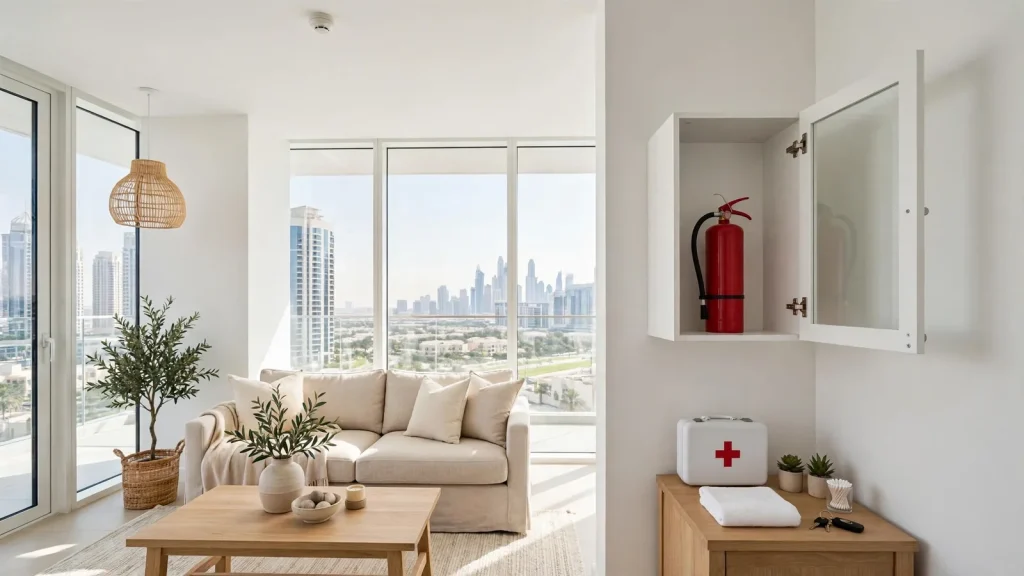
- What it means for you: Fit the full safety kit before your first guest arrives, because failures can mean suspension, not just a warning.
Rule 10: Insurance is mandatory
Comprehensive cover from a Dubai-licensed insurer is a condition of the license, not a nice-to-have. See our guide to holiday home insurance in Dubai for what the policy must include.
- What it means for you: Arrange compliant cover before you apply for the permit, because the license depends on it.
What just changed: shared housing has its own rulebook now
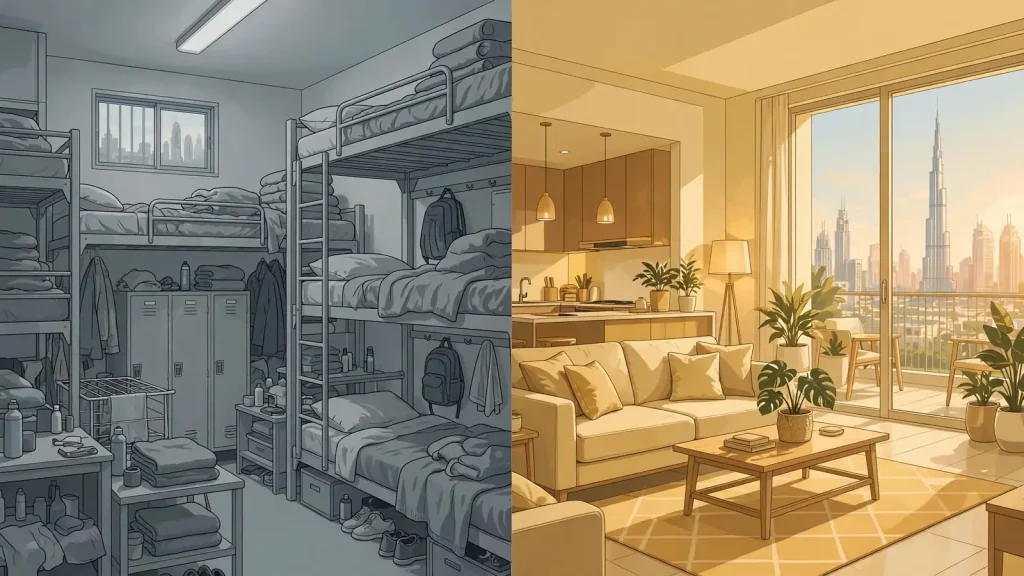
Dubai Municipality introduced a shared-housing framework under Dubai Law No. 4 of 2026. It splits shared accommodation into individual and family categories and names the approved areas where each can operate.
Along major tourism corridors, shared housing for individuals is off the table: family sharing only. A single building or villa must be one or the other, never mixed.
The standards are specific: minimum 5 sqm bedroom space per occupant, one full bathroom per four residents, and family units need a private bedroom and bathroom per family. Fines run from AED 500 up to AED 500,000 with higher penalties for repeat offences, and existing properties get a one-year grace period to comply.
| Aspect | Shared housing (bedspace) | Licensed holiday home |
|---|---|---|
| License type | Shared-housing permit | DET holiday home permit |
| Unit type | Shared rooms/bedspaces | Whole unit only |
| Who can operate | Licensed shared-housing operators | Owners, tenants with consent, or licensed managers |
They are different licenses for different activities. The licensed whole-unit holiday home is the compliant way to earn nightly income on your property.
This framework concerns shared and bedspace housing, not licensed whole-unit holiday homes.
What happens when you break the rules
Enforcement is real, and the penalties stack. Operating without a license, missing guest reports, and unpaid Tourism Dirham are treated as separate violations.
- Operating without a license carries published fines in the AED 5,000 to 20,000 band per violation, with repeat violations doubled.
- DET can suspend or revoke permits.
- Platforms can remove the listing.
- Blacklisting from the tourism system is the extreme end.
- Unpaid Tourism Dirham and missed guest reporting count as separate violations.
The AED 500 to 500,000 fine band belongs to the separate shared-housing regime, not to licensed holiday homes.
Who each rule falls on: owners, tenants, managers
| Role | Their rules | Their costs |
|---|---|---|
| Owner-host | Permit per unit, classification, annual renewal, insurance, building approval | Permit fees, insurance, renewal costs |
| Tenant-host | Written landlord consent, one-unit individual cap, same guest and Tourism Dirham duties | Permit fees, insurance (same duties as owner-host) |
| Licensed manager | Company trade license, operates permits under its license, handles guest reporting, remittance, inspections | 15-24% all-inclusive fee |
StayBetterDXB absorbs all of it inside the 15-24% all-inclusive fee. See our guide to short-term property management in Dubai for what full management covers.
How to check your unit is rule-clean before you list
- Confirm building approval.
- Create your DET portal account and apply for the permit.
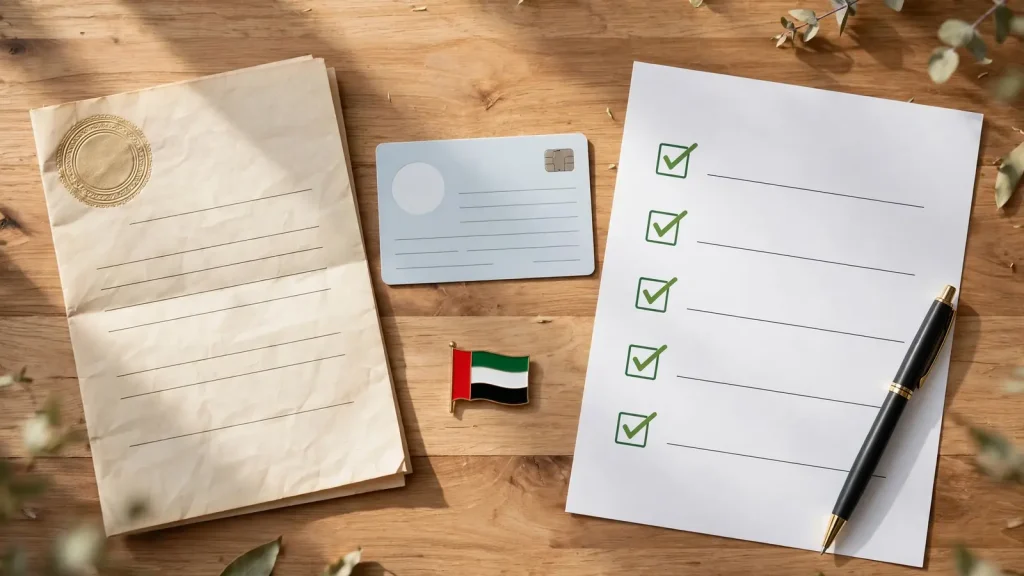
- Gather documents: title deed, passport or Emirates ID, property management letter, DEWA bill.
- Classify the unit and pay the fees.
- Fit the safety kit and display the QR code.
- Put the permit number on the listing.
Once your documents are ready, you can apply for a holiday home permit on the DET portal. The online application takes you through classification and payment in one flow.
New to the setup? Learn how to start a holiday home business in Dubai the legal way, then see how to launch an Airbnb business in Dubai once your permit is in hand.
The compliant way to earn: hand the rulebook to a licensed operator
Every rule above is a weekly admin task for a DIY host: permits, renewals, guest reporting, monthly Tourism Dirham remittance, inspections, fine risk.
StayBetterDXB runs it all as a licensed Superhost operation. One all-inclusive commission of 15 to 24%, zero markups, no surprise charges.
You keep the nightly income. We keep the rulebook.
Owners who want the badge itself can follow our guide to become an Airbnb Superhost in Dubai.

Compare your options in our guide to the top Airbnb management companies in Dubai before you hand over the keys.
Dubai Airbnb rules: owner FAQs
Is Airbnb legal in Dubai?
Yes. Running an Airbnb in Dubai is legal, but it is a licensed activity. Your unit must hold a DET holiday home permit, it must be rented as a whole unit, and you must follow the guest registration, Tourism Dirham, and safety rules that come with the permit.
Do I need a license to host on Airbnb in Dubai?
Yes. Every unit needs its own DET holiday home permit before it can be listed. The permit is issued per unit, classified as Standard or Deluxe, renewed yearly, and its number must appear on your listing. Hosting without one risks fines, delisting, and suspension.
Can I rent out just one room on Airbnb in Dubai?
No. Dubai only allows whole-unit holiday homes in residential buildings. Room-only and shared-room lets are not permitted, and the new shared-housing framework runs on a completely separate license for bedspace accommodation.
Can a tenant run an Airbnb in Dubai?
Yes, with two conditions. The landlord must give written consent that names holiday-home use explicitly, and the tenant must still get the DET permit for the unit. Renting out a leased apartment without the landlord’s written approval can trigger eviction proceedings.
What happens if you host on Airbnb without a permit in Dubai?
Published enforcement includes fines in the AED 5,000 to 20,000 band per violation, with repeat violations doubled. DET can also suspend or revoke permits, and platforms can remove the listing. Unpaid Tourism Dirham and missed guest reporting count as separate violations.
How many properties can one person list on Airbnb in Dubai?
An individual can operate up to eight holiday homes under an individual license. Above eight units, you need a licensed company structure with a trade license that covers holiday home rental.
Do the new shared-housing rules affect Airbnb holiday homes?
No, they run on different licenses. The new framework governs shared and bedspace accommodation: approved areas, family-only corridors, no mixing families and individuals, minimum space per occupant. A licensed whole-unit holiday home is a separate, compliant category, which is why it is the safe way to earn nightly income on your property.
The rulebook is the moat: licensed, whole-unit, compliant operators keep earning while rule-breakers get delisted.