One bad booking can erase a month of profit. A single unauthorized party means deep cleaning, neighbor complaints, a damaged sofa, and a review dispute you cannot win. In Dubai, where every guest must be registered and the owner answers for what happens inside the unit, screening is not a nice-to-have. It is the system that protects your income.
- Run by an Airbnb Superhost operator, not a tips blog
- 81 guest reviews at a 4.99 rating across 9 live Dubai listings
- Every step below runs on those listings today
Why Screening in Dubai Is a Different Game
Dubai adds a compliance layer that most global screening guides ignore. Every guest is registered through the DET holiday-homes system around check-in. The Tourism Dirham is collected per occupied room per night and remitted monthly. And the owner, not the guest, answers for noise, damage, and community complaints.
- Registration is mandatory: every guest goes through the DET holiday-homes system around check-in.
- You collect the Tourism Dirham: AED 10 per occupied room per night for Standard units and AED 15 for Deluxe. It is guest-paid and remitted monthly through the DET portal.
- Liability sits with you: noise complaints, damage, and community issues land on the owner. The booking platform will not absorb them for you.
- ID checks are normal here: passport or Emirates ID copies before check-in are standard for regulatory, security, and building-access purposes.
- Buildings add their own rules: security desks, community management, and access procedures sit on top of DET requirements. Your screening must satisfy both.
The 7-Step Screening System
Use this on every booking. It takes minutes per reservation once it becomes routine, and it filters out the bookings that cost owners the most.
Step 1: Lock Your Booking Filters Before Anyone Inquires
Most bad bookings are preventable before the first message. Your platform settings are the first filter.
- Require verified ID: only accept guests with government ID verified on the platform.
- Require a track record: set a minimum of positive reviews from previous hosts wherever the platform allows it.
- Set weekend minimums: two-night minimums on weekends cut the highest-risk booking pattern sharply.
- Publish house rules up front: no parties, quiet hours, occupancy caps. Guests accept them to book.
Step 2: Read the Guest Profile Like a Detective
The profile tells you most of what you need. Read it before you read the message.
- Reviews first: look for consistent praise about cleanliness and communication. One bad review among many is normal. A pattern is not.
- Account age matters: a brand-new account is not an automatic rejection, but it means the other steps carry more weight.
- Verified ID badge: no badge, no booking. This is non-negotiable in Dubai.
- Profile completeness: a complete, human profile correlates with accountable guests. Empty profiles deserve extra questions.
Step 3: Ask the Trip-Purpose Questions
Message before you accept. Vague answers are data.
- Who is coming: full names and the exact headcount. Match it against your occupancy cap.
- Why Dubai: business, family visit, relocation, or holiday. The purpose should fit the booking length.
- Confirm the key rules: ask guests to confirm the two rules that matter most to you. The answer shows whether they actually read them.
- Watch for evasion: “just a few friends” or “we will see” is an answer. Treat it as one.
Step 4: Verify ID Before You Hand Over Access
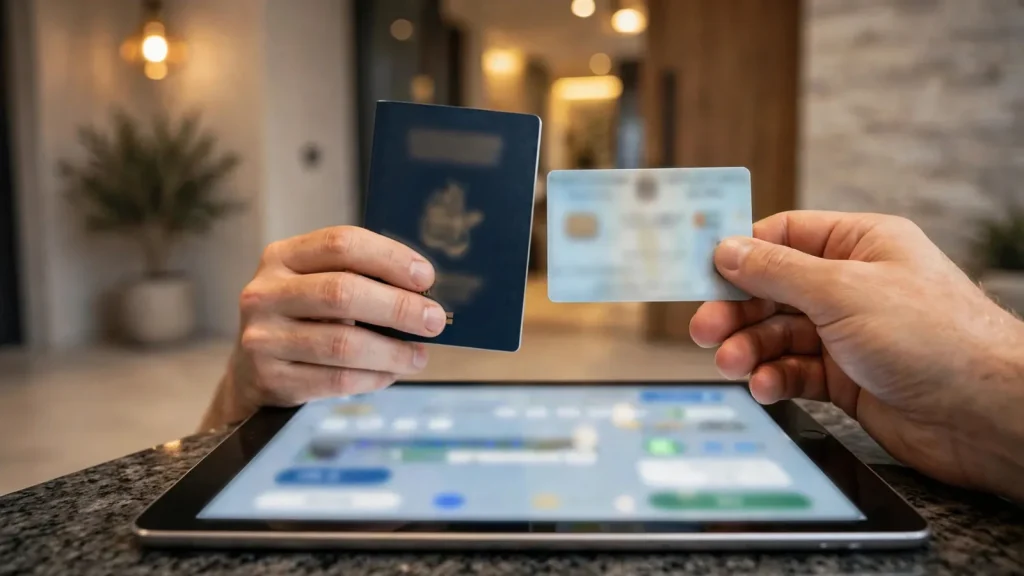
Collect a passport or Emirates ID copy before check-in. Check that the name matches the reservation. No match, no door code.
- Collect before arrival: never share the address or access details until ID is in hand.
- Match names to the booking: the person checking in must be the person who booked.
- Keep copies filed: store ID copies with the booking dates. Your records should match your calendar exactly.
Step 5: Register Every Guest With DET
Every guest must be registered through the DET holiday-homes system around check-in. Build the Tourism Dirham into your pre-arrival message so guests never meet it as a surprise.
- Register at check-in: complete guest registration through the holiday-homes system as part of your arrival flow.
- Keep records aligned: file ID copies and stay dates so your records match your booking calendar exactly. Mismatches are what get flagged in inspections.
- State the Tourism Dirham early: put the per-night, per-room charge in your pre-arrival message. Surprises at the door become bad reviews.
Step 6: Write House Rules That Actually Hold Up
Rules are your leverage in every dispute. Weak rules mean weak outcomes.
- Quiet hours: state them in clock times. “Be respectful” is not a rule.
- No parties or gatherings: name it explicitly. This is the rule that saves you.
- Occupancy caps: never exceed the unit’s limit. DTCM sets occupancy by unit configuration.
- Put them everywhere: in the listing, in the welcome message, and printed inside the property. A rule the guest never saw is a rule you cannot enforce.

Step 7: Choose Your Damage Cover: AirCover or a Deposit
Screening reduces risk. Cover handles what slips through. Understand both before you need either.
| Cover | What it covers | Where it falls short |
|---|---|---|
| Airbnb’s AirCover | Up to $3M in host damage protection and up to $1M in host liability cover per occurrence, automatic on Airbnb bookings | Airbnb bookings only; excludes wear and tear, cash, and normal cleaning; claim evidence rules have tightened |
| Security deposit | Cash held against damage; works across Airbnb, direct, and other channels | Must be disclosed clearly before booking; collecting and returning it is your admin work; disputes are yours to resolve |
Note the gap most owners miss: direct bookings sit outside AirCover entirely. If you take direct reservations, a deposit or dedicated cover is not optional. Read Airbnb’s AirCover terms before you rely on it.
Red Flags That Should Stop a Booking
Learn the patterns. One red flag means slow down. Two means walk away.
| Red flag | What it usually means | What to do |
|---|---|---|
| Last-minute one-night weekend booking from a local account | The highest party-risk pattern in the business | Require full ID, a deposit, and written rule acceptance, or decline |
| Account created the same day as the request | No track record to judge | Maximum screening on every other step |
| Vague or evasive answers about trip purpose | The guest is hiding the real plan | Ask directly once more, then decline if it stays vague |
| Headcount pushing the unit’s occupancy limit | Extra unregistered guests are coming | Cap it in writing before accepting |
| Refusal to share ID or accept house rules | Non-compliance before check-in predicts non-compliance after | Decline. This one is never worth it. |
Match Screening Intensity to Guest Risk
Not every booking needs the full system. Calibrate the effort to the risk and you will never burn out on screening.
| Guest profile | Risk level | Screening stance |
|---|---|---|
| Family booking, week-plus stay, strong review history | Low | Light touch: standard ID and registration |
| Mid-term corporate or relocating professional, 30-plus nights | Lowest party risk, highest lifetime value | Standard process, and prioritize winning the booking. Guest mix shifts with the seasons: read about the winter vs summer guest mix. |
| Short summer stay, new account, local weekend request | High | Maximum screening on all seven steps |
The Tech Layer: Locks, Monitors and Cameras
Good tech does not replace screening. It backs it up when you are not there.
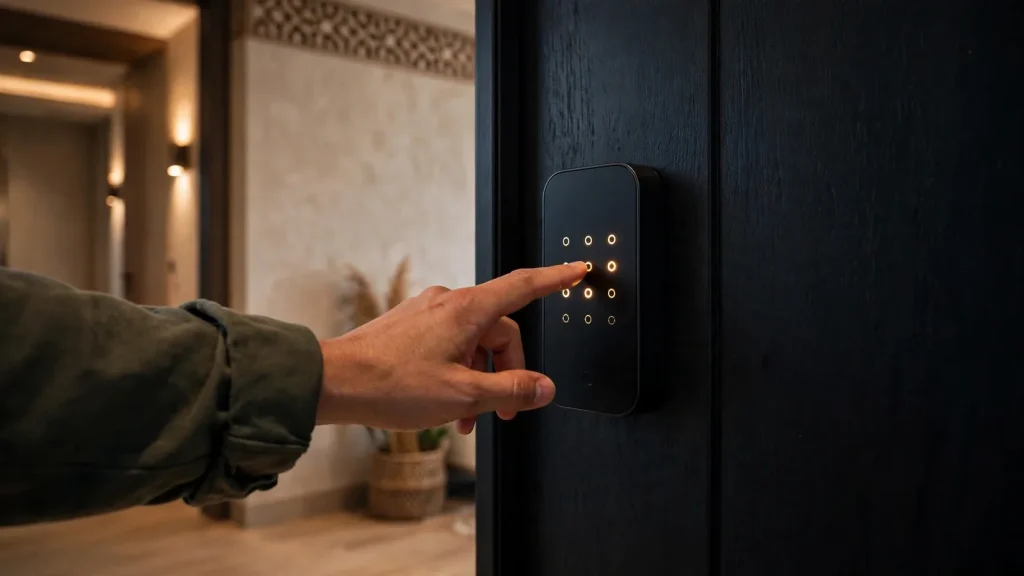
- Smart locks: unique per-guest codes that change after every checkout. No key handoffs and no copies floating around.
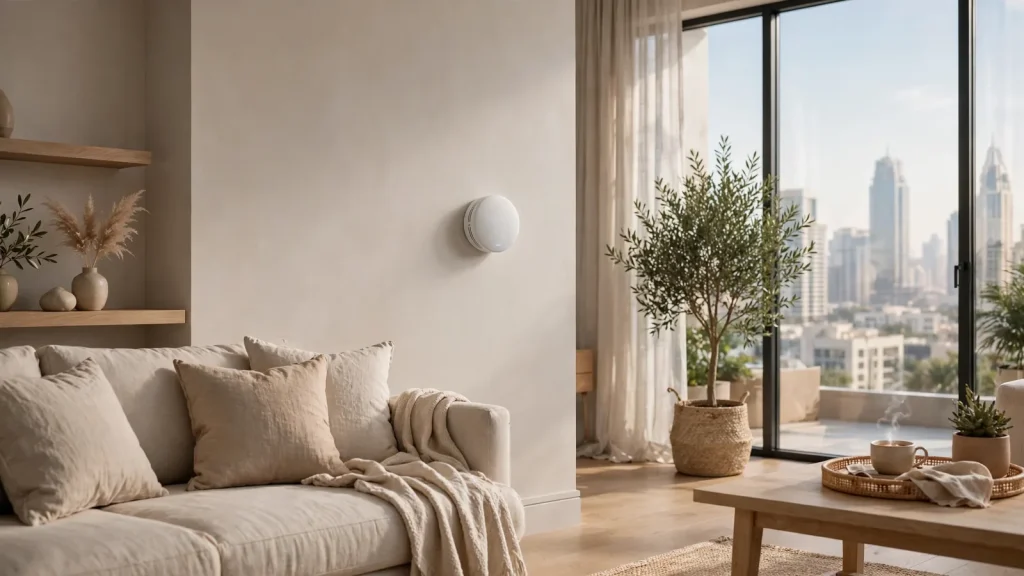
- Noise monitors: decibel-level devices measure loudness without recording conversations. Disclose the device in your listing. Installed cost runs from a few hundred dirhams.
- Cameras: exterior and common-area cameras where the building allows them. Never inside the unit itself.
When Screening Becomes a Full-Time Job
Add it up. Pre-arrival verification calls, ID checks, DET registration, 24/7 messaging, in-stay incidents, damage claims. On every single booking, all year. This is the workload most owners underestimate until the first 2am call.
The math is simple. Illustrative example: a single bad weekend with damage, deep cleaning, and a lost week of bookings can easily cost more than a full year of the management fee gap between self-managing and professional management. One incident pays for the system you skipped.
This is exactly what a management company absorbs. StayBetterDXB runs a full screening desk: pre-arrival verification calls, ID and DET registration handled, 24/7 guest communication, noise protocols, and damage claims filed for you. It is run by an Airbnb Superhost with 81 reviews at 4.99 across 9 Dubai listings, at an all-inclusive 15 to 24 percent commission with zero markups. When choosing a management company, ask who answers the 2am call. Here, someone does.
See what full management covers in the management packages, understand the holiday home permit costs, and run your numbers against the revenue playbook.
FAQs
Do I have to collect guest ID for a Dubai holiday home?
Yes. Asking for a passport or Emirates ID copy before check-in is standard practice in Dubai, required for regulatory, security and building-access purposes. Collect it before you share the address or door code, and check that the name matches the person who made the reservation.
Do I need to register my guests with DET?
Yes. Every guest must be registered through the DET holiday-homes system around check-in. Keep ID copies and stay dates filed so your records match your booking calendar exactly. Mismatches are what get flagged in inspections.
How does the Tourism Dirham work?
It is a per-night charge per occupied room (AED 10 for Standard units, AED 15 for Deluxe), paid by the guest and remitted by the owner monthly through the DET portal. Build it into your pre-arrival message so guests never meet it as a surprise.
Can I take a security deposit on Airbnb in Dubai?
You can, but the terms must be disclosed clearly before the booking is finalized. Never spring it at check-in. Weigh it against Airbnb’s AirCover, which covers guest damage automatically on Airbnb bookings but does not touch direct or other-channel reservations.
What should I do if I suspect a guest is planning a party?
Message them first and ask directly about the occasion and the full guest list. Require ID from every adult and a security deposit, tighten the house rules in writing, and decline the booking if the answers stay vague. With Instant Book, cancel penalty-free if you are genuinely uncomfortable. A limited number of such cancellations is allowed per year.
Are noise monitors legal in Dubai holiday homes?
Decibel-only monitors, which measure loudness without recording conversations, are the accepted tool and are widely used by professional operators. Disclose the device in your listing. Cameras are never permitted inside the unit itself.
Is guest screening really worth doing myself?
Screening is not one task, it is a desk: pre-arrival verification calls, ID checks, DET registration, 24/7 messaging, and in-stay incident response on every booking. Most owners hand it to a manager the first time a 2am incident costs them a weekend of revenue, which is exactly the workload a management company absorbs.